

Customer-Centric Approach to Business Growth
95% of organisations say that they are customer-focused, 8% of their customers agree. Organisations that do not make customer-centricity a primary focus in their business strategy will not succeed in the age of the customer.
A customer-centric culture — the cornerstone of great business
Our customer service expectations are higher than ever before. No matter what we are buying or doing, from a morning coffee to a tax return to a new car purchase, we want personalised service and faster responses.
The good news is, there has never been more opportunity to bring these kinds of solutions to the market. Fast-moving technology has made available devices that are smarter, more responsive and more customer-centric to solve problems customers face (coffee ordering apps, online tax returns, plenty of options to customise a new car).
For a nimble start-up or an industry-disrupting entrepreneur, it's a great time to be in business. But what if you're not?
You have probably heard the term customer centricity being used more and more in relation to customer experience, but why? What does having a customer centric culture mean and why should your business set this as their customer experience goal?
Having a customer-centric design means that you place the needs of your clients at the heart of everything you do, creating an environment that is driven towards bettering their experience. This means having:
- An engaging and collaborative team
- An understanding of the customer's perspective
- A clear customer journey
- Technology in place to better understand your customers
- A system to collect customer feedback
- A customer experience strategy that uses the feedback you have collected
It is these steps that will help create an engaging and collaborative experience that allows you to provide a service that meets the expectations of your customers. If the expectations of your customers are met they will feel valued and show loyalty, which benefits your business in the long run.
Our customer service expectations are higher than ever before. Customers expect a fast and personalised service from everyone, even if it's just the barista serving me my morning coffee or someone at tax time helping with filing my returns!
This high standard may have some businesses sweating, but the good news is there has never been more opportunity to bring these kinds of solutions to the market. With all the new technology, it's never been easier to create a customer centric experience. The most successful businesses are those who recognise that innovation is key and will work hard at staying ahead of their competition by utilising these smarter, more responsive devices.

How large organisations can embrace customer-centricity
For more conservative, traditional models of well-established businesses, these changing times can be disconcerting. And any organisation that makes the customer the centre of their world has a huge jump on the competition.
Customer experience design can be a huge part of this revolution. Market disruptors are bringing more customer-centric products and services to the market. But rather than seeing this as a threat, smart organisations will see it as their chance to do the same, to create new products with new technology that will show customers that they have been listening and watching and know exactly what they want.
Many large and long-established businesses have failed to invest in customer-centric programs and innovations because they are seen as expensive, full of challenges and can appear difficult to implement alongside business as usual (BAU) demands. But this customer-centric approach needn't be a separate initiative; in fact, seamlessly integrating it with BAU is imperative for businesses that wish to future proof themselves.
Making customer experience a priority and recognising that money spent on improving customer interactions with your business can have enormous potential to reward hard work with happy (even, delighted) customers who return more often and spread the word, presents a major investment opportunity for any business.
Drive a customer-first culture
Future-proof your business by changing from the outside- in using customer led-experience design
GET IN TOUCHA company-wide approach to customer-centricity
People can often be resistant to change and understandably so. Change can be hard. It can disrupt the status quo and create uncertainty around what this change might affect. This rings even more true with large organisations, especially long-established companies with deeply ingrained processes, culture and traditions. The very thought of shifting to a whole new way of operating a business focused around the customer can appear a little overwhelming. Each member of the organisation would also benefit from understanding the role they play in the customers' experience.
These changes are not easy to make, but they could be the chance for a reinvention and a new lease of life for a business. Here's how it could work:
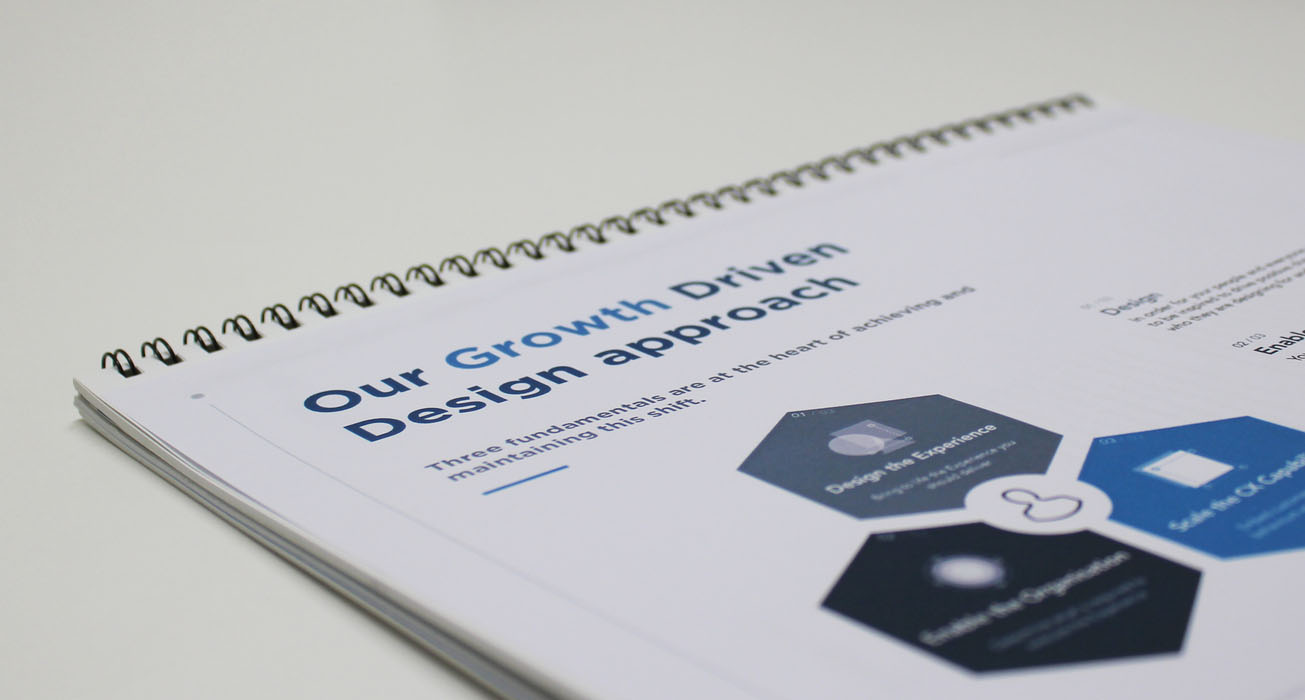
- Design the experience in order for your people and everyone associated with your Service to be inspired to drive positive change, they need to understand who they are designing for and why.
- Enable the organisation to ensure a clear sight of the system of enablers required to deliver the target experience. What do they need to be able to do and how do all they interrelate, to move from ideas to actions.
- Scale the CX capability by empowering internal teams who are capable of evolving the experience, choosing the right enablers and strengthening the culture.
Creating a customer-centric strategy for your business
The good news is, it doesn't need to be difficult. Even though there may be challenges along the way, employees can embrace a new vision that clearly shows the benefits for the customer and for themselves.
As we shift to a focus on the customer becoming a more widely acknowledged and valuable approach to driving business growth, it becomes the catalyst for investment in new customer-centric services initiatives that are long overdue, having been placed on a CX backlog that has struggled to get traction.
The key to implementing a successful customer-centric approach in a business is to ensure that your employees understand your customer strategy and consistently deliver it day-to-day. Equally important is for organisations not to see this in a negative light, but instead, as an exciting challenge and opportunity to change how they design, implement and deliver centric customer service and experience.
Drive a customer-first culture
Future-proof your business by changing from the outside- in using customer led-experience design
GET IN TOUCHFrequently asked questions
- What is Customer-Centricity?
- Customer centricity is an organisational mindset that puts the customer at the centre of the business rather than products or sales.
- Why is being Customer-Centric important?
- A business model that adopts a customer-centric approach helps to achieve a positive and personalised experience for customers and encourages employees to pay attention to the customer.
- What are six capabilities to build a customer centric organisation?
- Improve experience through the Voice of the Customer, Experience Design & Improvement, Customer-Centric Strategy, Customer-Centric Culture, Organisational Adoption & Accountability and Metrics, Measurement & ROI.
- What is a customer-centric culture?
- Creating and nurturing culture, through behaviours, practices and standards that encourages all employees to focus on delivering outstanding customer experiences.
- How can I create a customer centric culture?
- A Customer-Centric culture can be achieved through driving employee engagement and involvement, from the front lines to the executive suite and developing and delivering ongoing CX interaction training to employees. Following, you will be able to develop communication strategies and tactics to share the importance of CX with employees, customers and the company to then collect and share stories of CX excellence at your company.
- What is the Voice of the Customer and how can it be utilised?
- Voice of Customer captures and analyses customer needs, wants, perceptions and preferences to build collective insight. This can be utilised by designing and implementing Voice of Customer programs (solicited through surveys, focus groups, communities, etc.), collecting unsolicited experience feedback from customers (by mining calls, web data, emails, etc.) and gathering input from employees about customer experiences and opportunities for improvement. From this, analysing Voice of Customer feedback drawn across sources to identify customer pain points and opportunities to improve and differentiate and to finally identify and map major customer touch-points in the customer experience.


 Felicity Clark